


 Gastroenterology
 An anal fissure is a small tear or ulcer in the skin around the opening of the anus. Anal fissures can be treated with several different types of surgery, the most common of which are lateral internal sphincterotomy (a small incision is made in the internal anal sphincter muscle to relax it) or a fissurectomy (in which the surgeon removes all damaged skin around the fissure to enable the wound to heal).
APC is a procedure in which a Gastroenterologist seals irregular or bleeding tissue during a gastroscopy or colonoscopy using ionized argon gas.
A capsule endoscopy is a procedure in which the patient swallows a small, capsule endoscopy wireless camera whilst wearing a halter monitor. The camera travels through the digestive tract, including the small intestine, and it takes thousands of pictures. It then transmits them to a receiver.
A Colonoscopy is an examination of the colon (large intestine) using a long, thin, flexible tube with a camera called a colonoscope.
Flexible sigmoidoscopy is a test that uses a flexible, narrow tube with a light and tiny camera on one end, called a sigmoidoscope , to look inside the rectum and the lower, or sigmoid, colon.
A gastroscopy is an examination of the upper digestive tract (the oesophagus, the stomach and duodenum) using a long, thin, flexible tube with a camera called a gastroscope.
Haemorrhoid banding, or rubber band ligation (RBL) is a relatively non-invasive procedure where elastic bands are applied to the base of the haemorrhoids in order to cut off blood supply and flatten the haemorrhoids.
A haemorrhoidectomy is the surgical removal of haemorrhoids under anaesthetic.
This procedure refers to the infusion of an iron and saline mixture directly into the bloodstream through the use of an IV.
The National Bowel Cancer Screening Program (NBCSP) invites Australians aged over 50 to screen for bowel cancer using a free, simple test at home. Australia has one of the highest rates of bowel cancer in the world. Around one in 23 Australians will develop bowel cancer during their lifetime.
Click here for more information
There is no one recommended screening test for gastric cancer. Screening and diagnostic tests for oesophageal and gastric cancer can be performed via endoscopy. Other screening methods include barium swallow/upper GI x-ray or endoscopic ultrasound.
Oesophageal Dilation is a procedure performed to stretch or widen the oesophagus using weighted dilators.
Polyps are growths on the inside of the colon or gastrointestinal tract and are very common. A polypectomy can be performed during a colonoscopy or gastroscopy procedure.
Sclerotherapy is used as a treatment for Varicose and Spider Veins. It involves the injection of a solution into the vein to intentionally damage the vein causing it to gradually disappear.
 General Surgery
 Carpal tunnel release is a surgery used to treat carpal tunnel syndrome. There are two types of Carpal Tunnel Release Surgery; Endoscopic and Open.
Endoscopic carpal tunnel release surgery is the use of an endoscope to cut the transverse carpal ligament. The endoscope is usually inserted through a small incision in the palm.
During the open surgery, the surgeon will cut the carpal ligament to relieve pressure on the median nerve, and make more space for the nerve and tendons.
Laparoscopic hernia surgery is a surgical procedure in which a laparoscope is inserted into the abdomen through a small incision to repair the hernia.
Open hernia repair is the procedure performed to repair hernia by pushing the hernia back in place through an abdominal incision.
Laparoscopic Cholecysectomy is the removal of the gallbladder through ‘key hole surgery.’
Surgical removal of lesions is a simple procedure undertaken to remove growths such as lesions, tumours or moles for either medical or cosmetic reasons.
Wedge resection toenail is the surgical treatment for an ingrown toenail.
 Gynaecology
 Dilation and curettage (D&C) is a procedure to remove tissue from inside the uterus. A D&C is usually performed to diagnose and treat certain uterine conditions.
A hysteroscopy is the procedure in which a thin, lighted tube is used to examine the inside of the uterus and cervix. Hysteroscopy can be used in the diagnosis and treatment of several conditions such as abnormal bleeding, polyps or tumours inside the uterus, and adhesions.
Also known as ‘key-hole’ surgery, a laparoscopy is the procedure in which a laparoscope containing a fibre-optic camera and/or surgical heads is inserted through a small incision in the abdomen. Some of the many problems which can be diagnosed or treated by laparoscopy are infertility, reproductive problems, ectopic pregnancy, urinary disease and liver and pancreas cancer.
LLETZ stands for large loop excision of the transformation zone (of the cervix). In this procedure, the surgeon will remove a small segment of the cervix (the lower part of your womb or uterus) for examination.
 IVF
IVF IVF was originally developed to treat women with irreparably damaged Fallopian tubes. It allows those stages of conception which usually occur in the tubes – oocyte (egg) collection, fertilization and early embryo development – to be performed in the laboratory i.e. in vitro. It is now widely used to treat most forms of infertility including endometriosis, male infertility, immunological infertility, and idiopathic or unexplained infertility.
Oocyte Pick Up (OPU) is the surgical procedure in the IVF cycle in which the eggs are collected or retrieved.
A sperm aspiration procedure from the epididymis (PESA).
Sperm aspiration from the testicle (TESA).
 Oculoplastic
 A blepharoplasty is a procedure which removes excess or sagging skin from upper and/or lower eyelids. The surgery is usually performed for cosmetic reasons however; it can improve sight in patients whose eyelids are obscuring their vision.
A canthoplasty is a surgical procedure that tightens the area around the eye in order to correct a drooping appearance, and create an upward slant in the outer corner of the eye.
A Dacryocystorhinostomy (DCR) is an operation performed to unblock the nasolacrimal duct (tear duct).
Ectropion is a medical condition where the eyelid folds outward. Corrective surgery involves the removal of a small piece of the fold to tighten the muscles in the area.
Entropion is a medical condition where the eyelid folds inward. Corrective surgery involves the removal of a small piece of the fold to tighten the muscles in the area.
Excision of lesions is a procedure to remove growths such as lesions, moles and tumours from the skin, sometimes accompanied by frozen sections and followed by sutures or a graft. The most common reason for undertaking this procedure is for the removal of skin cancers such as Basal Cell Carcinoma which is the most common skin cancer on the face.
Ptosis is a drooping of the upper eyelid. Corrective surgery is performed by tightening the levator muscle through an incision in the normal crease in the upper lid.
A wedge excision is a procedure which removes cancers from the edge of the eyelid.
 Oncology
 Venesection, or phlebotomy, is the removal of blood from the body (usually through an incision or needle) for analysis or donation. It can be used as a treatment for haemochromatosis and polycythemia.
 Ophthalmic
 Cataract surgery is the surgical replacement of a cloudy lens with an artificial intraocular lens (IOL) implant to restore vision. The cloudy lens is broken up and removed with an ultrasound probe through a very small incision in the eye, and the artificial lens is inserted.
Glaucoma is characterised by elevated intraocular pressure associated with optic cupping and visual field loss. Glaucoma filtering surgery such as a trabeculectomy or goniotomy are aimed to lower intraocular pressure by forming a new drainage pathway to allow fluid to escape from the eye. During your surgery, your surgeon may implant a glaucoma drainage device such as a stent.
Intravitreal injections are used in the treatment of Age-Related Macular Degeneration. The Injections work by inhibiting the growth of abnormal blood vessels at the macula, and help to prevent leakage of these blood vessels.
A pterygium is a growth of blood vessels and fibrous tissues covering the surface of the eye due to over-exposure to sunlight over an extended period of time. A pterygium is treated with a surgical excision and an auto-conjunctival graft.
Squint surgery involves tightening the extraocular eye muscles to change the eye position in order to correct a turned eye.
A temporal artery biopsy is the most common diagnostic test for giant cell arteritis.
Vitrectomy is a surgery which removes the vitreous gel from the eye to assist in the repair of retinal detachments, macular holes and retinal membrane surgeries.
 Oral & Maxillofacial
 Dental implants are used to replace damaged or missing teeth. A dental implant procedure is where a screw or metal fixture is implanted into the jaw as the base for a new false tooth.
When wisdom teeth have the potential to cause problems or become impacted, they may be removed surgically. In the procedure, the surgeon makes a small incision and extracts the tooth with forceps.
A tooth extraction is the removal of a tooth from the dental alveolus (socket) in the alveolar bone.
 Orthopaedic
 Anterior cruciate reconstruction (ACL reconstruction) is a common procedure tin which a graft is used to reconstruct the ligament in the knee.
An arthroscopy is a procedure in which an endoscope is inserted in a joint through a small excision in order to diagnose and treat a number of conditions. An arthroscopy can be performed on a knee, shoulder, wrist or ankle.
Endoscopic carpal tunnel release surgery is the use of an endoscope to cut the transverse carpal ligament. The endoscope is usually inserted through a small incision in the palm.
Carpal tunnel release is a surgery used to treat carpal tunnel syndrome. During the surgery, the surgeon will cut the carpal ligament to relieve pressure on the median nerve, and make more space for the nerve and tendons.
Dupuytren’s contracture is the development of a fibrous connection between the finger tendons and the skin of the palm resulting in a forward curvature or ‘clawing’ of one or more fingers. Treatment for Dupuytren’s contracture includes needling, injections and surgical procedures to sever the tissue causing the contracture.
Lateral release surgery is a procedure performed on the knee to realign the patella (kneecap). It is usually performed as an arthroscopic procedure.
Meniscal repair is a surgical procedure performed to repair torn knee cartilage.
Metatarsophalangeal (MTP) Joint Fusion is a surgical procedure in which the MTP Joint (big joint of the big toe) are fused together.
Synovectomy is the surgical removal of the inflamed synovium (the tissue lining the joint), and is usually performed with an arthroscopy. The surgery is usually performed in cases of inflammatory arthritis where there is swelling causing pain, or limiting the range of motion of the digits and thumb.
Trigger Finger, also known as stenosing tenosynovitis or flexor tendonitis, is a condition where one of the fingers or thumb of the hand is caught in a bent position. Surgery may be undertaken to release the tight portion of the flexor tendon sheath.
 Plastic & Reconstructive
 Commonly referred to as a ‘tummy-tuck’, an abdominoplasty is a cosmetic or reconstructive surgery to remove excess skin and fat from the abdomen, and to tighten the stomach muscles.
Breast augmentation is the surgical increase of the size of woman’s breasts, usually through the use of breast implants.
A breast lift, or mastopexy, raises and firms the breasts by removing and tightening the surrounding skin.
Breast reduction surgery also known as reduction mammoplasty is a procedure to reduce the size of large breasts through the removal of excess fat, tissue and skin from the breasts.
The forehead lift or browlift is performed to correct sagging eyebrows or improve the lines of a person’s forehead.
An excision of lesion procedure is the surgical removal of a skin lesion. Skin lesions can be any lumps on the skin including moles, cysts, warts or skin tags.
An excision of melanoma procedure is the surgical removal of melanoma (a form of skin cancer).
Facelift, also known as meloplasty or rhytidectomy, involves surgical procedures that tightens and removes drooping skin.
Gynaecomastia surgery aims to remove the excess breast tissue, fat and skin from the male chest. Surgery usually consists of a combination of liposuction followed by glandular excision.
Labiaplasty surgery is a procedure which reduces and reshapes excess labia minora tissue of the vagina.
A lipectomy refers to any surgical procedure carried out to remove excess body fat. The most common of which is liposuction (a surgical procedure which suctions out excess fat).
Otoplasty, also known as ear correction surgery or ‘ear pinning’, is performed to move prominent or protruding ears closer to the head. It is done using permanent sutures to hold the ears in place.
Rhinoplasty is a surgical procedure which improves the appearance or function of the nose by reshaping the nasal bone and cartilage. It is performed by either an Otolaryngologist – head and neck surgeon, Maxillofacial surgeon, or Plastic surgeon.
Sentinel node biopsy is usually performed to identify whether cancer such as breast cancer or melanoma has spread to the lymphatic system. The procedure involves injecting a tracer material to help locate the nodes, and then removing the nodes for analysis.
 Urology
 The circumcision procedure (for infant males) involves the use of a Plastibell (a small plastic ring) which is slipped over the glans, and the foreskin is laid over it.
A cystoscopy is a procedure in which a thin flexible tube with a camera and light on the end is inserted through the urethra and into the bladder. The procedure is most commonly undertaken to investigate the bladder for any abnormalities.
A frenuloplasty is a procedure used to treat pain caused by tight or short frenulum of the penis.
A stent removal is the removal of a ureteral stent by a surgeon using a cystoscope. A cystoscope is a thin, flexible tube with a camera and a light that is inserted through the urethra.
A vasectomy is a surgical procedure that sterilises a man by cutting the vas deferens, which are tubes that carry sperm from the testes to the penis.
 Opening Hours: 7:30am to 5:30pm, Monday to Friday. Our friendly personnel are always ready to assist with your enquiries.
 Tel: (03) 5444 3533
 Contact Person: Natalie Waters, Director of Nursing [email protected]
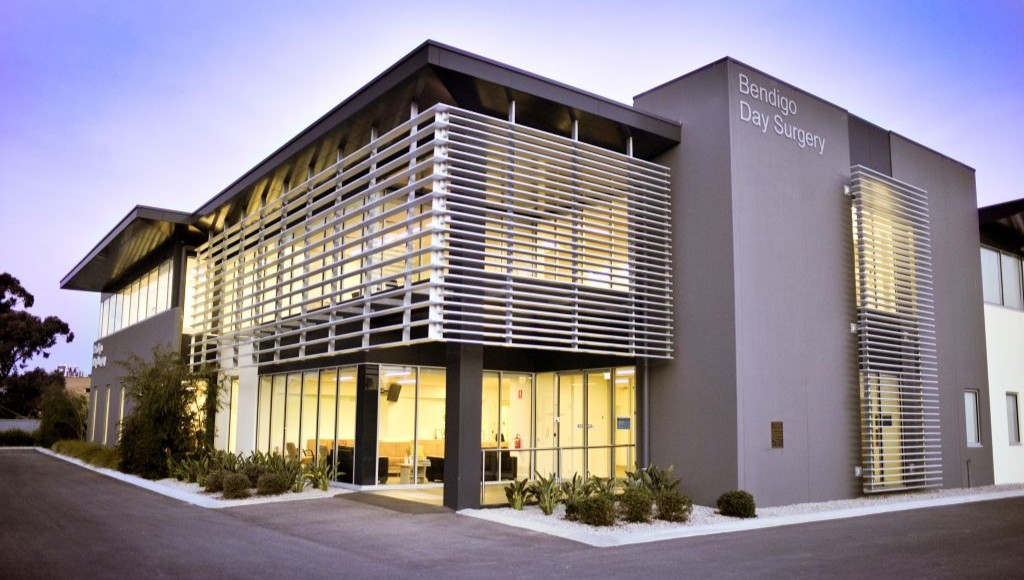
 Address: 1 Chum St, Bendigo VIC 3550